
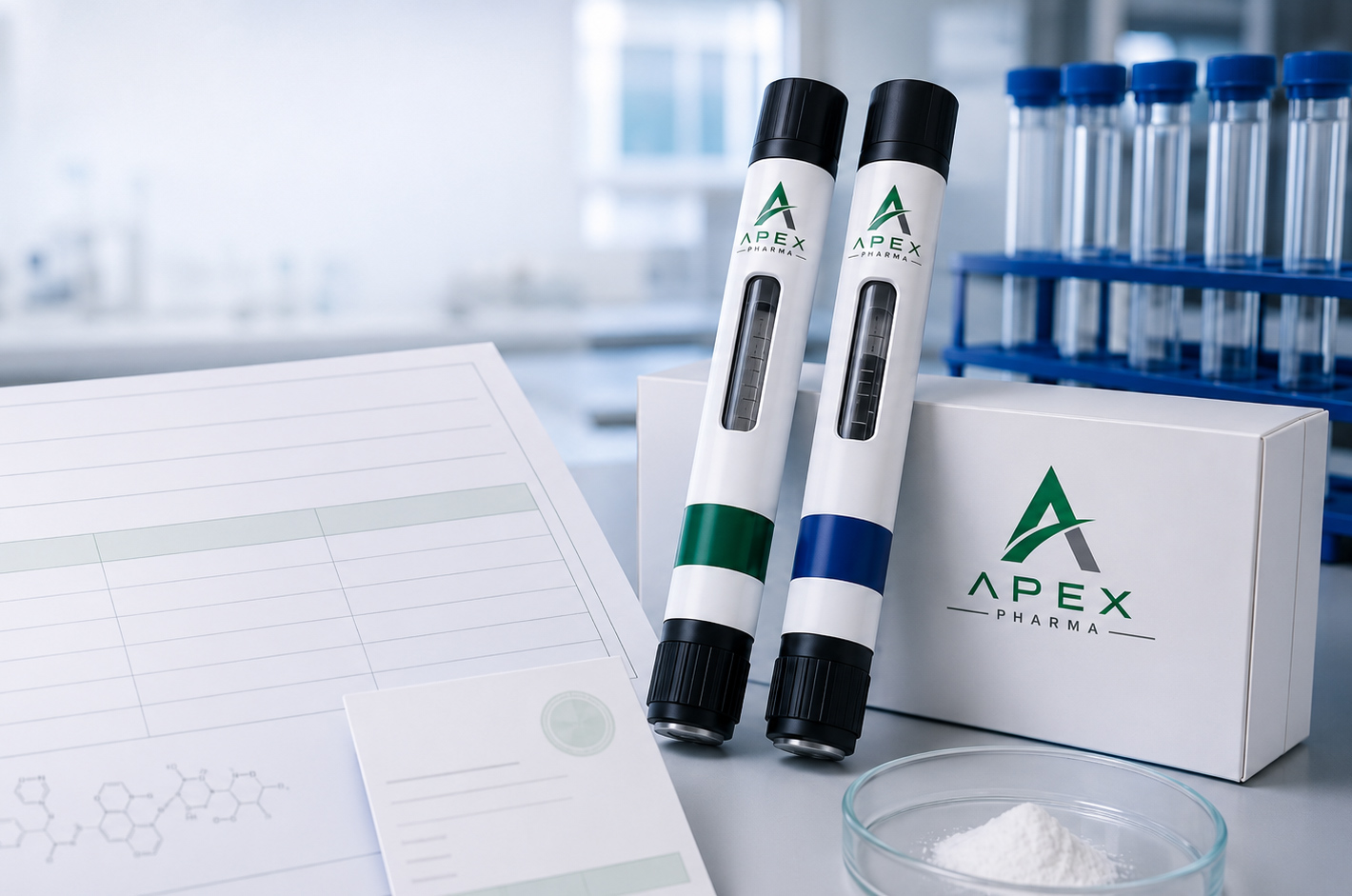
Quality documentation is an important consideration when sourcing peptides for controlled laboratory and scientific research. A Certificate of Analysis, commonly abbreviated to CoA, can provide useful batch-specific information about the identity, composition and reported purity of a research compound.
Independent analytical testing can add another layer of transparency by allowing a third-party laboratory to evaluate a submitted sample using recognised analytical techniques. Janoshik Analytical is widely recognised within the research compound sector for providing independent testing services for peptides and related materials.
Researchers reviewing products such as the Reta Pen 20mg and Reta Pen 40mg should understand what analytical documents may show, what they do not guarantee and why the exact batch number matters.
What Is a Peptide Certificate of Analysis?
A peptide Certificate of Analysis is a document containing analytical and quality-control information relating to a particular product or production batch. It is generally prepared by the supplier, manufacturer or laboratory responsible for evaluating the material.
A CoA should relate to a clearly identified batch rather than acting as a general statement about every product of the same name. This is important because separate manufacturing runs may have different batch numbers, production dates and analytical results.
Depending on the product and testing performed, a Certificate of Analysis may include:
- Product or compound name
- Batch or lot number
- Date of manufacture
- Date of analysis
- Reported peptide purity
- Molecular identity information
- Analytical testing methods
- Appearance or physical description
- Storage recommendations
- Quality-control release information
When reviewing documentation for the Reta Pen 20mg or Reta Pen 40mg, researchers should confirm that the product name, quantity and batch reference match the item being supplied.
Why Batch-Specific Documentation Matters
Peptide testing is normally performed on a sample associated with a particular production batch. A report for one batch should not automatically be treated as proof of the identity or purity of a separate manufacturing run.
Batch-specific documentation supports traceability by connecting the supplied material to the analytical data recorded for that production lot. This can help laboratories maintain accurate internal records, compare repeat orders and identify which test results relate to materials used in a particular research programme.
For example, documentation associated with one batch of the Reta Pen 20mg should not be assumed to verify every future batch of the same product. The same principle applies to the Reta Pen 40mg.
What Is Janoshik Testing?
Janoshik testing refers to independent analytical testing performed by Janoshik Analytical. Suppliers and researchers may submit peptide or research compound samples for evaluation using analytical methods selected according to the testing requirements.
The resulting report may provide information relating to molecular identity, chromatographic purity, peptide quantity or other requested analytical characteristics. The precise scope of a report depends on the type of analysis commissioned.
Independent testing is valuable because it is conducted separately from the supplier’s internal quality-control process. However, a report should always be interpreted according to the sample tested, the analytical methods used and the batch information shown on the document.
Common Analytical Methods Used for Peptides
Several laboratory techniques may be used to assess peptide samples. Each method provides different information, which is why identity and purity testing should not always be treated as interchangeable.
High-Performance Liquid Chromatography
High-performance liquid chromatography, commonly known as HPLC, separates components within a sample according to their chemical interactions with the chromatographic system.
HPLC is frequently used to estimate the relative purity of a peptide sample by showing the proportion of detected material associated with the main chromatographic peak. Additional peaks may indicate impurities, degradation products or other sample components.
An HPLC result is useful for purity assessment, but it should be interpreted alongside suitable identity testing rather than being treated as complete confirmation of molecular identity by itself.
Liquid Chromatography-Mass Spectrometry
Liquid chromatography-mass spectrometry, abbreviated to LC-MS, combines chromatographic separation with mass-based analysis. This allows a laboratory to separate sample components and assess their mass characteristics.
LC-MS may help determine whether the tested sample contains material corresponding to the expected peptide and whether additional components are present.
Mass Spectrometry
Mass spectrometry is commonly used to evaluate molecular mass. When the detected mass corresponds with the expected peptide, this can support confirmation of molecular identity.
Identity confirmation and purity assessment answer different questions. A sample may contain the expected peptide while also containing additional material, which is why researchers should review the complete analytical information rather than relying on one figure alone.
Peptide Content or Quantity Testing
Some testing services may assess the amount of peptide present within a submitted sample. This is different from chromatographic purity because purity describes the proportion of detected peptide-related material, while quantity testing considers how much of the compound is present.
Researchers reviewing products such as the Reta Pen 20mg and Reta Pen 40mg should distinguish between reported purity and verified total peptide content.
Purity and Quantity Are Not the Same
One of the most important distinctions in peptide testing is the difference between purity and quantity. These measurements provide related but separate information.
Purity generally describes how much of the detected peptide-related material corresponds with the principal compound rather than other detected components.
Quantity describes the total amount of the target compound contained within the tested sample.
A sample may show a high relative purity result without confirming that the total quantity matches the product label. Equally, quantity testing alone does not necessarily provide a complete chromatographic profile of the sample.
For a product labelled as the Reta Pen 20mg, the relevant questions may include whether retatrutide was identified, what chromatographic purity was reported and whether the measured quantity aligns with the stated presentation. The same review process applies to the Reta Pen 40mg.
How to Read a Janoshik Analytical Report
Researchers should review an analytical report carefully rather than focusing solely on the headline percentage. A useful assessment considers the report identification, submitted sample, testing date, methods and reported results.
Key details to check may include:
- The analytical report or verification reference
- The name or description of the submitted sample
- The customer or supplier associated with the submission
- The date the sample was tested
- The analytical methods performed
- The reported identity result
- The chromatographic purity result
- The measured peptide quantity, where tested
- Any comments or limitations shown on the report
- Whether the report can be verified through the laboratory
The information on the report should also correspond with the supplier’s batch documentation. Where possible, researchers should match the report with the exact product, quantity and lot being purchased.
Supplier CoA vs Independent Janoshik Testing
A Supplier Certificate of Analysis and an independent Janoshik report can both contribute to product transparency, but they serve different roles.
A Supplier CoA is generally part of the product’s internal manufacturing or quality-control documentation. It may contain production details, batch information, testing results and storage recommendations.
An independent Janoshik report is produced following third-party analysis of a submitted sample. This provides external testing data that is separate from the supplier’s internal records.
| Feature | Supplier Certificate of Analysis | Independent Janoshik Report |
|---|---|---|
| Issued by | Supplier, manufacturer or production laboratory | Independent analytical laboratory |
| Primary purpose | Document internal batch specifications | Provide third-party sample analysis |
| May include batch number | Yes | Where supplied with the submitted sample |
| May include purity results | Yes | Yes, where purity testing was commissioned |
| May include quantity testing | Depending on the CoA | Where quantity testing was commissioned |
| Independent of supplier | No | Yes |
Where both documents are available, researchers can compare the internal batch information with the independent analytical findings.
Testing Documentation for the Apex Pharma Reta Range
Apex Pharma is committed to providing clear product information and access to relevant analytical documentation where available. Products within the Reta range may be supported by a Supplier Certificate of Analysis, independent analytical testing or both.
The Reta Pen 20mg provides a smaller retatrutide presentation that may suit exploratory or limited-scale laboratory research. The Reta Pen 40mg contains a greater total quantity and may be considered for broader or longer-term research programmes.
Both presentations contain the same investigational retatrutide compound. The principal distinction between the Reta Pen 20mg and Reta Pen 40mg is the total quantity supplied.
Researchers should review the documentation associated with the exact presentation and batch they intend to order. A report for a 20mg product or previous production lot should not automatically be treated as verification of a separate 40mg presentation or newer batch.
What Analytical Testing Cannot Guarantee
Analytical testing provides useful information about the submitted sample, but it should not be interpreted as an unlimited guarantee covering every characteristic of the product.
A testing report generally reflects:
- The particular sample submitted
- The condition of that sample at the time of analysis
- The tests specifically commissioned
- The analytical methods used
- The limitations of those methods
A standard identity and purity report may not automatically assess sterility, endotoxin levels, residual solvents, microbial contamination, packaging integrity or long-term stability unless those tests were specifically requested.
Researchers should therefore avoid assuming that one analytical result verifies characteristics that were not included within the scope of testing.
Questions to Ask a Peptide Supplier
Before ordering research peptides, customers may wish to ask the supplier several questions about testing and documentation.
- Is a batch-specific Certificate of Analysis available?
- Has an independent laboratory tested the product?
- Which analytical methods were used?
- Was identity confirmed as well as purity assessed?
- Was the total peptide quantity measured?
- Does the report match the exact batch being sold?
- Can the analytical report be independently verified?
- Are storage recommendations provided?
- Will a new report be issued for future production batches?
A reliable supplier should answer legitimate documentation questions clearly and avoid presenting one report as universal proof for unrelated batches or product presentations.
Warning Signs When Reviewing Peptide Testing
Researchers should approach analytical claims cautiously where the supporting information is incomplete, inconsistent or impossible to verify.
Potential warning signs include:
- No visible batch or lot reference
- A report that does not identify the submitted sample
- Testing documents that cannot be independently verified
- A purity claim without an analytical method
- One report reused across unrelated products
- Quantity claims based only on chromatographic purity
- Testing dates that do not align with the current batch
- Edited, cropped or incomplete laboratory reports
- No distinction between supplier and third-party testing
Professional branding should not replace meaningful analytical evidence. Researchers should focus on traceability, testing scope and whether the report corresponds with the material being supplied.
Why Testing Transparency Matters
Transparent analytical documentation allows researchers to make more informed procurement decisions. It can also support internal laboratory records, batch comparison and consistent study planning.
For individual researchers, accessible documentation can help clarify what testing has been performed before a product is added to a research inventory. For laboratories and procurement teams, batch-specific information can support purchasing procedures, audit records and repeat-order management.
Whether selecting the Reta Pen 20mg for smaller research requirements or the Reta Pen 40mg for a larger programme, documentation should form part of the wider product-review process.
Frequently Asked Questions
What is a peptide Certificate of Analysis?
A peptide Certificate of Analysis is a batch-related document that may include product identity, lot information, analytical methods, reported purity and quality-control data.
What does Janoshik testing show?
The information shown depends on the analysis commissioned. A report may include peptide identity, chromatographic purity, molecular mass or measured peptide quantity.
Does a high purity result confirm the total quantity?
No. Purity and quantity are separate measurements. A high chromatographic purity percentage does not automatically confirm how much peptide is present within the sample.
Why should the batch number match the testing report?
Analytical testing applies to the submitted sample and associated production batch. Matching the batch number helps connect the supplied product with the relevant test results.
Is a Supplier CoA the same as independent testing?
No. A Supplier CoA generally documents internal batch information, while independent testing is performed by an external analytical laboratory on a submitted sample.
Are reports available for the Reta Pen 20mg and Reta Pen 40mg?
Relevant Certificates of Analysis or independent analytical reports may be available for selected products and batches. Researchers should review the applicable product page or contact Apex Pharma for current documentation.
Does one Reta testing report cover every batch?
No. A report should be reviewed in relation to the exact sample and batch tested. Documentation for one production lot should not automatically be applied to another.
What is the difference between the Reta Pen 20mg and Reta Pen 40mg?
The main difference is the total quantity of retatrutide supplied. Both presentations contain the same investigational compound, but the 40mg option provides twice the total amount.